
Updated: · Binh Tien Crane
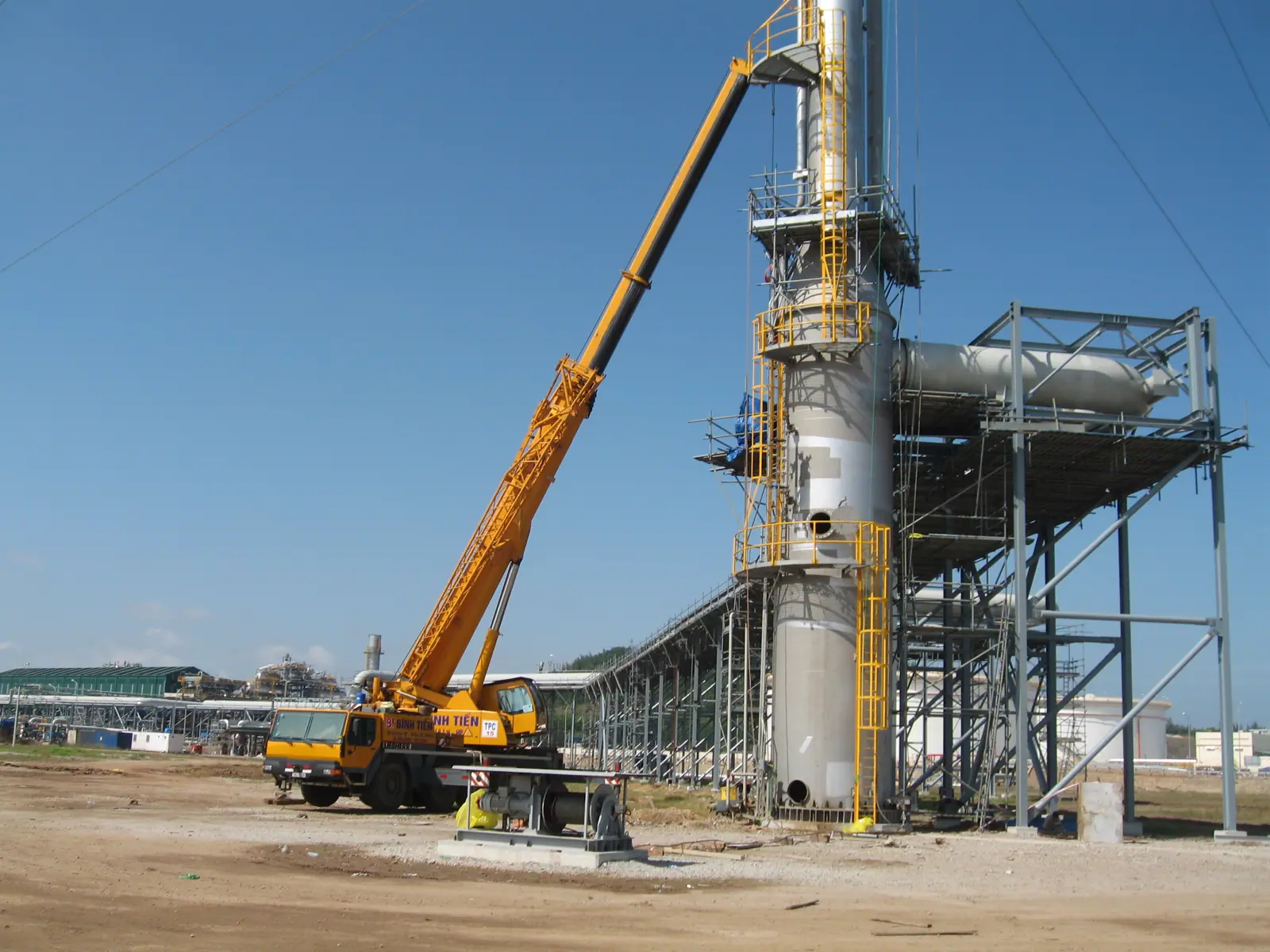
Many people ask “how many tons?” when hiring a crane. The figure in a crane's name is its maximum capacity at the shortest radius with the shortest boom. As the boom reaches further or higher, capacity drops quickly. Picking the wrong crane is a common cause of delays and unsafe lifts.
1. The three numbers that matter
- Lifted weight: the load plus hook block, slings, shackles and spreader beams.
- Radius: the horizontal distance from the crane's centre of rotation to the load's centre at the furthest point of the lift.
- Lift height: the height the load must clear, plus its own height and the rigging length.
2. Reading the load chart
Every crane has a manufacturer's load chart giving capacity for each boom length and radius. A mobile crane might lift a heavy load at 3 m but only a fraction of it at 20 m. Engineers pick a crane whose rated capacity stays above the actual load with a sensible safety margin.
3. Ground and set-up area
Soft ground, excavations or quay edges need reinforcement or steel plates. Room for outriggers, access for the crane transport and counterweights all affect the choice.
4. Crawler, mobile or cargo crane?
- Mobile cranes: fast to arrive and rig, best for short jobs.
- Crawler cranes: high capacity, stable, pick-and-carry, best for long campaigns.
- Cargo cranes: carry and lift in one truck, economical for medium loads.
- Spider cranes: for tight and indoor spaces.
5. What to send for a quote
Load weight and size, photos or drawings, planned crane position, set-down point, structure height, location and dates. With this, Binh Tien can propose a crane and price it quickly with no surprises at mobilisation.